How Teradyne Robotics Scales Content Across 25+ Languages
In conversation with Storyblok's Brandon Watts at JoyConf NYC: the full story of how we built and operate a global content platform for the world's leading collaborative robotics brands.
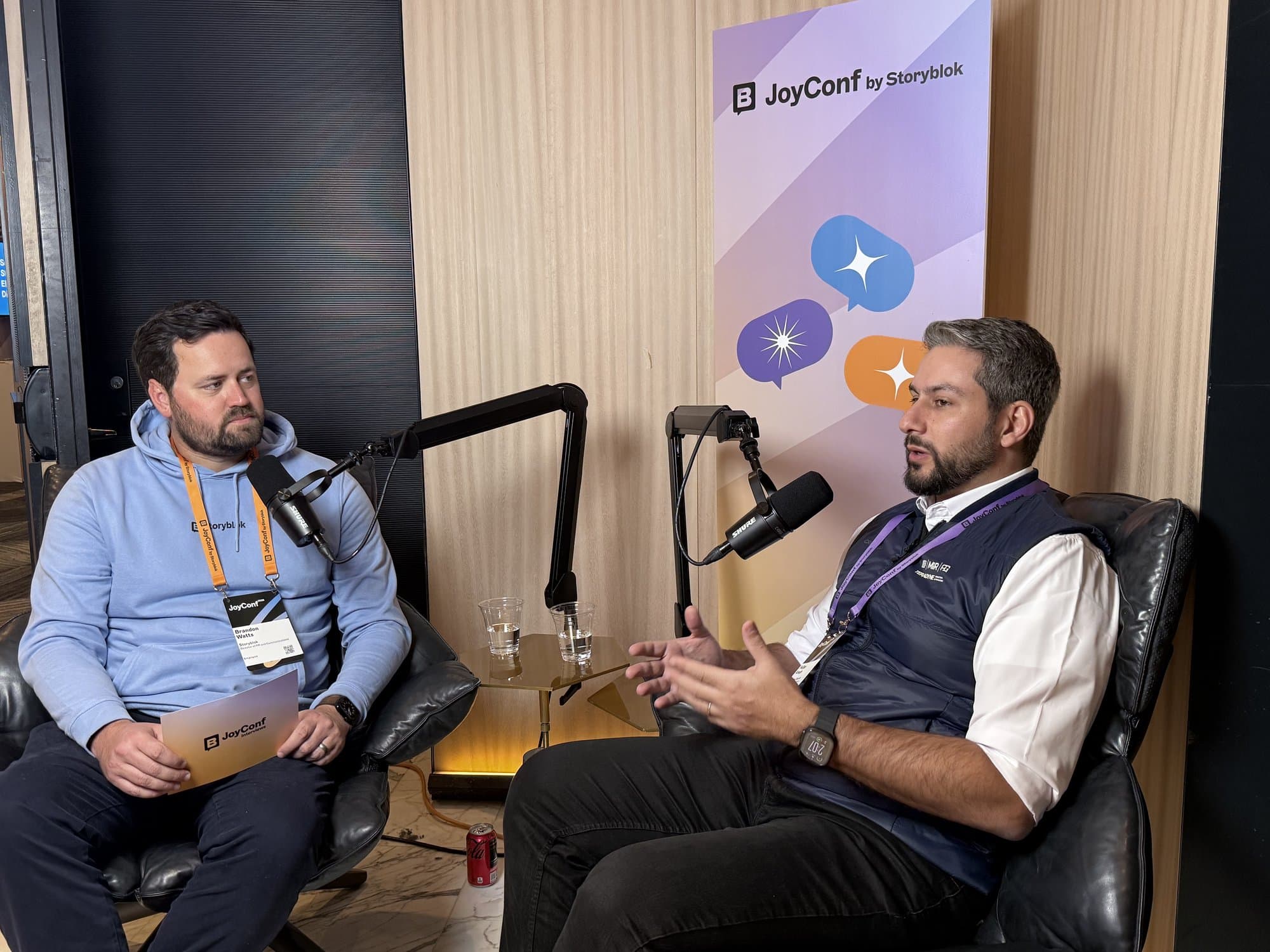
After my session at JoyConf New York, Storyblok's Director of PR and Communications Brandon Watts sat down with me to dig into the specifics of how Teradyne Robotics operates its content infrastructure at scale. The conversation covers the technical decisions, the organizational model, and what it actually looks like to run a global B2B platform across 25+ language variants without a large central team.
The challenge at scale
Teradyne Robotics sits above two of the most recognized brands in collaborative robotics: Universal Robots and Mobile Industrial Robots. Each brand has its own market presence, product range and buyer profile, but they share infrastructure. The challenge was to build a content platform that could serve both brands, across all markets, without the complexity that normally comes with that level of scale.
"The CMS has to be invisible to the local team. If they are thinking about the platform, you have already lost them."
Fellipe Araujo · JoyConf NYC 2025
Storyblok's component model was the right fit because it allowed us to maintain a single source of truth for design and functionality while giving each market full autonomy over content. The local team in Denmark publishes the same way as the team in Brazil, without needing to understand what is happening under the hood.
What 25+ languages actually means operationally
Most discussions about multilingual websites stop at translation. The real challenge is governance: who owns what, when does content need to be synchronised across markets, and what happens when a product changes in the middle of a campaign cycle. We built an operating model around those questions first, and then chose the tooling that supported it.
The result is a platform where a single content change can propagate across all language variants in a controlled, auditable way, without requiring a coordination meeting between 15 different market teams. That is the real scale unlock, and it is almost entirely an organizational design decision, not a technology decision.