Your website became a request queue, not a growth channel. How to migrate to a platform marketing can run alone
Every banner, landing page and translation waiting on a developer is not a staffing problem. It is a platform problem. Here is what a marketing leader should demand from a website migration, from the audit to the day the team publishes on its own.
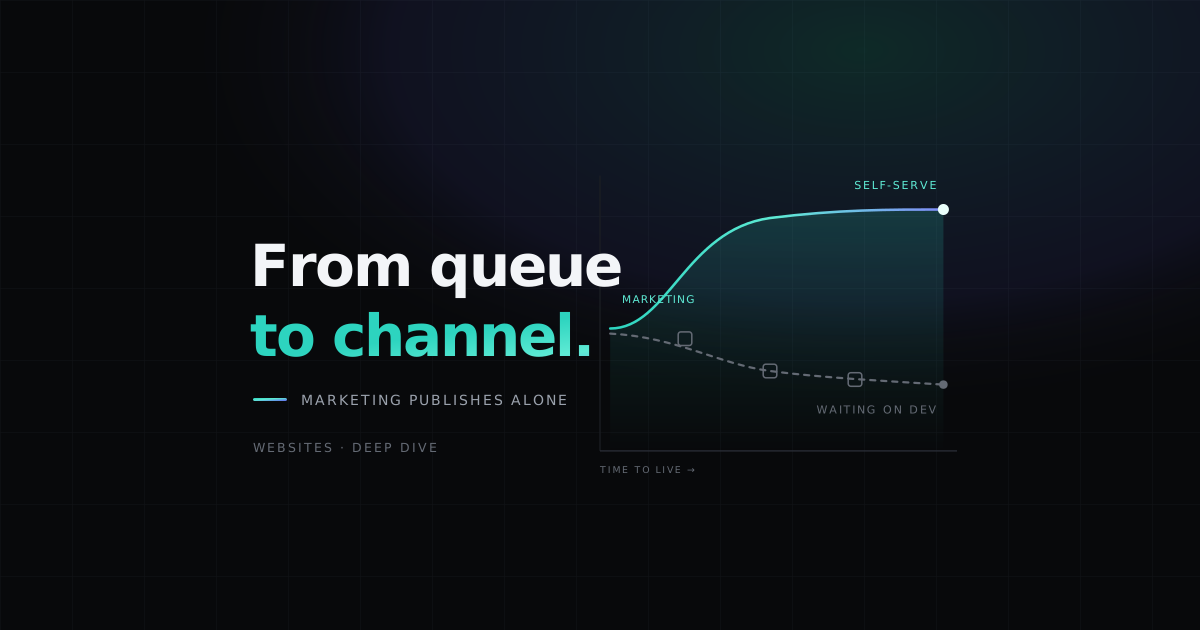
If every banner, landing page and translation is a request in someone else's backlog, your website is not a growth channel. It is a queue. Campaigns ship late or not at all, and the cost never shows up on an invoice, only in the pipeline you did not create.
Three signs your website outgrew its platform
I have lived this from the marketing seat. At a global technology group I led the web and digital experience for two brands on a single platform, across markets and languages, and I led a migration to a new CMS. The signs are the same everywhere, and you can spot them without reading a line of code.
First, every change waits on a developer. A new banner, a campaign page, a translated headline: each one becomes a ticket, and the people who know what the market needs this week are not the people who can touch the site.
Second, every brand or region runs on its own setup. Each team rebuilds the same components, workflows and integrations in parallel, updates stop reaching everyone at once, and every rollout gets harder than the last.
Third, it costs more every year to run, while publishing does not get any easier. Licenses, maintenance and specialist support keep growing. At some point the cost of standing still is the business case for the migration.
What the audit should answer for marketing
A migration that starts with technology picks the new tool first and finds the real problem later. Start with evidence. Before any platform is chosen, the audit should answer six questions in plain language.
- 01Which pages produce pipeline
Traffic, leads and revenue by page, so the migration protects what earns and retires what does not.
- 02Where the queue is
Which changes wait longest and who waits for them. That list is the first thing the new platform must remove.
- 03What gets rebuilt again and again
The components, templates and workflows every brand recreates, which should become one shared system.
- 04What search depends on
URLs, redirects, language versions and the pages that carry organic traffic today.
- 05What it costs to stay
Licenses, maintenance and support now, against the cost of running the new platform.
- 06Who will own it
The people who publish, the training they need and the permissions that stop developers being the bottleneck.
Scale makes this non-negotiable. On one estate of more than 60,000 pages I diagnosed and prioritized the pages by what they contributed, which turned a sprawling site into a low-cost acquisition channel. A site that size cannot be migrated page by page on instinct.
One platform, one design system, many markets
The biggest saving on a multi-brand or multilingual site is not the new CMS. It is the end of the rebuild. When components, templates and workflows live in one shared system, a new market or language costs weeks, not another team. That is how we ran content across more than 25 languages on a single platform.
Design that system once, with the markets in the room. Local teams then adapt content, not components, and governance stops drifting from one brand to the next.
Migrate without losing the traffic you already earned
Search is the first thing to break and the last thing anyone notices. Keep the URLs that earn traffic, map a redirect for every page that moves, carry every language version across intact, and migrate in waves so you can measure before the next one. A migration that loses its organic traffic pays for the new platform twice. Multilingual setups are where this goes wrong most often.
After launch: what it means for marketing to run it alone
A migration is finished when the marketing team publishes without opening a ticket, not when the site goes live. That means trained editors, clear permissions, reusable blocks and a short, written list of what still needs a developer. Then measure it with two numbers: how long a campaign page takes from idea to live, and how much pipeline the site contributes. If the first falls and the second does not move, you built a faster queue.
- Publishing a page
- Marketing, same day, no ticket
- New market or language
- Weeks on the shared system, not a new team
- Brand consistency
- One design system, reused by every brand
- Search
- Redirects mapped, organic traffic protected
- Developers
- Free for product work, not banner changes
- The scoreboard
- Time to publish, and pipeline from the site
"A migration only pays off if it ends with marketing publishing on its own and measuring pipeline."
Fellipe Araujo
How I work on it
I come in from the marketing side, next to your technical partners, never instead of them. Advisory: I work through the six questions with your team, so the platform and the partners are chosen with evidence. Fractional: I own the marketing side of the migration and the first months after launch, until the team runs it without me. Build: I build the site and the system around it, from SEO to CRM, and hand everything over. A strong technical team and a marketing lead who knows what to ask for are what make a migration last.